When people think of Kerala, they often imagine tranquil backwaters, swaying coconut palms, delicious cuisine, and luxurious houseboat cruises. But every year, during the monsoon season, these calm waters transform into the stage for one of India’s most thrilling cultural spectacles the Nehru Trophy Vallam Kali, popularly known as the Snake Boat Race.
Held on the picturesque Punnamada Lake in Alappuzha (Alleppey), this world-famous event attracts thousands of spectators from across India and around the globe. More than just a race, it is a celebration of Kerala’s rich heritage, community spirit, tradition, and passion.
If you’re planning a visit to Kerala during the monsoon season, there is no better way to experience its culture than by witnessing the Nehru Trophy Boat Race and complementing your journey with a relaxing stay on a traditional Kerala houseboat.
What is the Nehru Trophy Vallam Kali?
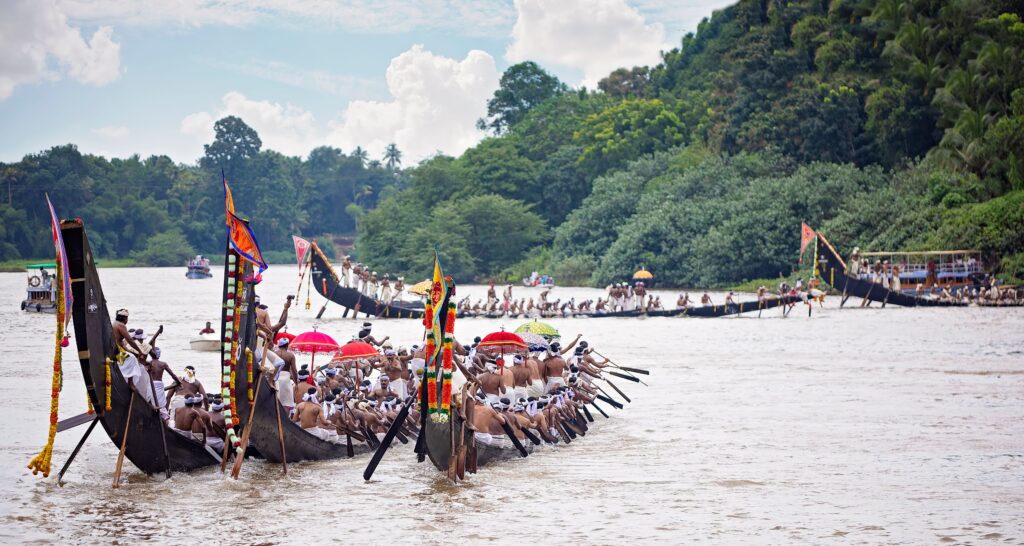
The Nehru Trophy Vallam Kali is Kerala’s most prestigious and celebrated snake boat race. Every year, massive traditional boats called Chundan Vallams compete fiercely across the waters of Punnamada Lake while thousands cheer from the banks.
The event combines:
- Tradition
- Sportsmanship
- Teamwork
- Music
- Village pride
- Cultural heritage
For the people of Kerala, especially those from the Kuttanad region, the race is much more than a sporting competition. It is a matter of honor, identity, and legacy.
The Story Behind the Nehru Trophy
The history of the Nehru Trophy Boat Race dates back to 1952, when India’s first Prime Minister, Jawaharlal Nehru, visited Alappuzha as part of his tour of Kerala. To honor his visit, local communities in the Kuttanad region came together and organized a snake boat race on the tranquil backwaters, showcasing one of Kerala’s most cherished traditions to the visiting leader.
Nehru was so fascinated by the sheer scale and energy of the event, the massive Chundan Vallams, the synchronized rowing, the rhythmic boat songs urging the crews forward — that he could not resist becoming part of the celebration himself. As the race concluded, he enthusiastically boarded the winning boat and rode along with the rowers, sharing in their joy and pride as though he were one of the village crew.
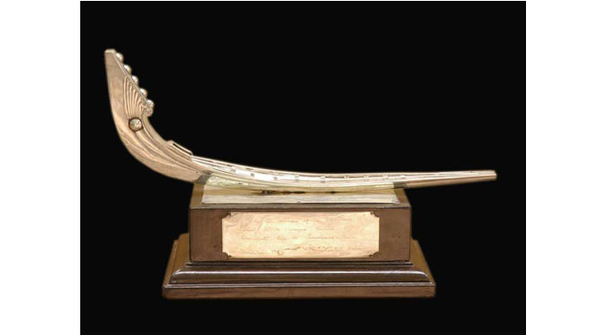
Deeply impressed by the experience, Nehru later commissioned a silver trophy shaped like a traditional snake boat and gifted it to the people of Kerala, with instructions that it be awarded to the winning team every year. Since then, the event has been known as the Nehru Trophy Boat Race, and the trophy continues to symbolize excellence, pride, and sporting achievement, standing today as one of the most coveted honors in Kerala’s boat racing tradition.
The Majestic Chundan Vallam: Kerala’s Snake Boat
The star of the event is undoubtedly the Chundan Vallam, commonly known as the Snake Boat.
These remarkable vessels are engineering marvels built entirely using traditional methods.
Key Features
- Length ranging from 100 to 138 feet
- Stern rising up to 20 feet above water
- Constructed from Anjili (wild jackfruit) wood
- Designed according to ancient boat-building traditions
- Maintained and preserved by local communities
The elevated rear portion resembles the hood of a cobra, which is how the boat earned the name “Snake Boat.”
Each boat carries its own history, identity, and loyal supporters.
A Display of Extraordinary Teamwork
One of the most fascinating aspects of Vallam Kali is the number of people working together in perfect harmony.
A single snake boat may include:
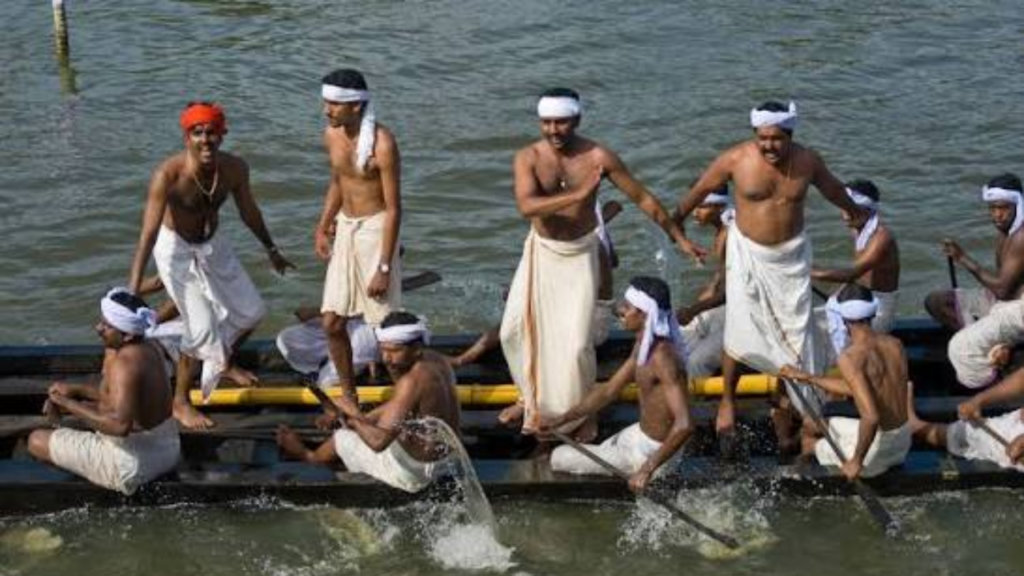
- 64–128 paddlers — Seated two abreast along the length of the boat, these rowers provide the raw power, pulling in perfect unison to drive the massive Chundan Vallam forward.
- Helmsmen controlling direction — Known as the Amarakkaran, the helmsman commands the stern using a long rudder-oar called the Adanayampu, steering the boat and controlling its turns and speed bursts throughout the race.
- Lead singers maintaining rhythm — Positioned on a central platform, these singers set and sustain the tempo of the boat song, keeping over a hundred paddlers rowing in perfect sync.
- Traditional boat song performers — Known as vanchipattu singers, they chant centuries-old verses that praise deities and celebrate valor, with the tempo of their song literally dictating the speed of the boat.
- Senior community representatives — Typically the Karanavan or Karanadhan, a respected village elder who traditionally commands the boat overall and holds the first Adanayampu, guiding both strategy and morale.
In total, over 100 participants can be present on a single boat, making it one of the largest crewed racing vessels in the world. Around 35 such boats take part in the Nehru Trophy Boat Race, each representing a village or community from the Kuttanad region.
The race is a true demonstration of teamwork, discipline, synchronization, and endurance, with every paddler’s stroke needing to align perfectly with the rest of the crew to keep the boat moving at speed. Months of training are required to prepare for the competition, as rowers build both the physical strength and the rhythmic coordination needed to compete at this level.
Vanchipattu: The Rhythm of the Race
No snake boat race is complete without Vanchipattu, Kerala’s traditional boat songs.
As rowers paddle in unison, singers chant rhythmic verses that motivate the crew and maintain synchronization.
The songs celebrate:
- Courage
- Devotion
- Local legends
- Community pride
- Kerala’s cultural heritage
The powerful combination of synchronized rowing and energetic singing creates an unforgettable atmosphere that echoes across the backwaters.
Why the Nehru Trophy Boat Race is So Special
Unlike modern sporting events, Vallam Kali is deeply connected to Kerala’s cultural roots, blending sport, faith, and tradition into a single living celebration. The race represents:
Community Spirit
Entire villages unite to support their boats, with every household contributing time, effort, or resources toward preparing the crew and vessel. The boat becomes a shared identity, and a win is celebrated not by a team but by the whole village.
Heritage Preservation
Traditional boat-building techniques, passed down through generations of craftsmen, are preserved and practiced even today. Built from Anjili wood without a single nail, following measurements drawn from ancient texts, each Chundan Vallam keeps centuries-old craftsmanship alive.
Physical Excellence
The training and discipline required rival professional sporting events, with rowers undergoing months of rigorous conditioning to build strength, stamina, and rhythm. Coordinating over a hundred paddlers to move as one demands a level of synchronization few other sports require.
Cultural Celebration
Music, rituals, festivals, and local traditions come together in one grand event, with boat-blessing ceremonies, offerings, and the rhythmic vanchipattu songs forming an inseparable part of the race. For many villages, the race is as much a spiritual occasion as it is a competitive one.
Tourism Attraction
The race attracts thousands of domestic and international tourists every year, drawn by the scale and spectacle of the event as much as by its cultural significance. Houseboats line the banks of Punnamada Lake, and the race has become a cornerstone of Kerala’s tourism calendar, particularly during the Onam season.
The Excitement on Race Day
On race day, Alappuzha transforms into a full-blown festival destination, with Punnamada Lake at the heart of the celebration. The town takes on a completely different energy, drawing visitors from across India and abroad who come not just to watch a race, but to experience an entire day of Kerala’s culture on display.
Visitors can expect:
- Electrifying crowds — Spectators packed along the banks, atop houseboats, and inside the pavilion, all cheering with an intensity that rivals any major stadium event.
- Traditional performances — Kerala’s classical and folk art forms often accompany the celebrations, adding color and rhythm to the day.
- Cultural programs — Inaugural ceremonies, music, and community events that showcase the region’s heritage alongside the sporting action.
- Local food stalls — Vendors lining the venue with authentic Kerala snacks and delicacies, letting visitors sample local flavors while they wait for the race.
- Vibrant celebrations — Flags, boat decorations, and festive energy that make the entire lakefront feel like one large community gathering.
- Spectacular racing action — The main event itself, where months of preparation culminate in a few intense, fiercely contested minutes on the water.
As the boats line up at the starting point, each crew focused and the massive Chundan Vallams gleaming under fresh decoration, the atmosphere becomes charged with anticipation. A hush often falls over the crowd in the final moments before the start, broken only by the distant beat of drums and the chants of the oarsmen preparing themselves.
Once the race begins, hundreds of oars strike the water simultaneously, creating a breathtaking display of speed, power, and precision. The roar of the crowd rises with every stroke, and the sight of a hundred-foot boat surging forward under pure human strength is something few other sporting spectacles can match. For many visitors, it becomes the highlight of their Kerala journey — a memory of sound, spectacle, and shared excitement that stays with them long after they’ve left the backwaters behind.
Why Tourists Love the Nehru Trophy Boat Race
International travelers often describe the event as one of the most authentic cultural experiences in India, unlike anything found on a typical tourist itinerary. Far from a staged performance for visitors, it’s a living tradition where an entire region comes together, offering travelers a rare, unfiltered glimpse into Kerala’s soul.
The race offers:
- Unique photography opportunities — From the dramatic curve of a Chundan Vallam’s raised stern to the blur of a hundred oars striking the water in unison, the race provides visuals that are almost impossible to capture anywhere else in the world.
- Rich cultural immersion — Visitors witness centuries-old rituals, boat-blessing ceremonies, and community customs firsthand, offering a depth of cultural exposure that goes far beyond sightseeing.
- Local interactions — From boat-club members proudly sharing their village’s history to vendors and fellow spectators swapping stories along the banks, the event naturally opens doors to genuine conversations with locals.
- Traditional music and celebrations — The rhythmic pull of vanchipattu songs, temple-style rituals, and festive drumming create an atmosphere steeped in heritage rather than spectacle alone.
- Scenic backwater views — Punnamada Lake, framed by coconut groves and dotted with houseboats, provides a naturally stunning backdrop that few sporting venues anywhere can rival.
- A once-in-a-lifetime experience — The sheer scale of the boats, the size of the crews, and the intensity of the competition combine to create memories that travelers often say they’ll carry with them long after leaving Kerala.
Few events in the world combine natural beauty, tradition, and sporting excitement as seamlessly as Vallam Kali. It is this rare fusion — nature, faith, community, and competition all unfolding together on the water — that continues to draw travelers back to Alappuzha year after year, and that leaves even seasoned globetrotters calling it one of the most unforgettable experiences of their journey through India.
Extend Your Experience with a Traditional Kerala Houseboat
After experiencing the excitement of the Nehru Trophy Boat Race, the perfect way to unwind is aboard a traditional Kerala Houseboat. Once the roar of the crowd fades and the boats return to their villages, the backwaters settle back into their natural rhythm — calm, unhurried, and ready to offer a completely different kind of experience.
While the race showcases the energetic side of Kerala’s backwaters, a houseboat cruise reveals their peaceful and serene charm, letting you experience the same waters at a much gentler pace. Imagine drifting slowly through:
- Coconut-lined canals, their reflections rippling gently as the houseboat glides by
- Emerald paddy fields stretching out toward the horizon
- Traditional villages where daily life continues unhurried along the water’s edge
- Fishing communities going about their routines, offering glimpses of authentic backwater living
- Hidden waterways that most tourists never get to see, tucked away from the main tourist routes
The same waters that host the thrilling race become your private retreat, transforming from a stage of roaring crowds and racing oars into a quiet world of gentle currents and open skies — a fitting contrast that lets you experience both faces of Kerala’s backwaters in a single unforgettable journey.
Welcome Aboard: The Kerala Boat House Experience
A Kerala Houseboat, locally known as a Kettuvallam, offers a unique combination of luxury, comfort, and traditional hospitality.
- Luxury Tiers: Beyond standard stays, you can choose Deluxe (nightly A/C), Premium (upgraded decor and sundecks), or Ultra-Luxury featuring dedicated chefs and gourmet cuisine.
- Flexible Fleet: Vessels range from 1-bedroom suites for couples to 7-bedroom boats for up to 14 guests, making them ideal for everything from honeymoons to corporate tours.
- Heritage & Expertise: Traditionally crafted boats are operated by native crews who navigate “hidden gems” and quiet routes away from typical tourist traffic.
- Alternative Exploration: Experience the backwaters via Shikara rides for intimate village views or kayaking for a silent, adventurous connection to nature.
- Personalized Stays: Customize your cruise duration (half-day to multi-night) and meal plans (Vegetarian or Non-Vegetarian) to ensure the journey feels personal
Taste the Flavours of Kerala
One of the highlights of a houseboat stay is the food.
Freshly prepared onboard meals often include:
Signature Dishes
- Karimeen Pollichathu
- Kerala Fish Curry
- Prawn Roast
- Chicken Curry
Vegetarian Delicacies
- Avial
- Thoran
- Sambar
- Kerala Rice
Traditional Snacks
- Banana Fritters
- Pakoras
- Fresh Coconut-Based Dishes
Special dietary requirements, including vegetarian, vegan, and Jain meals, can also be arranged.
Best Time to Visit
The Nehru Trophy Boat Race is generally held during the monsoon season, usually in August — and if there’s one time to experience Kerala’s backwaters at their absolute best, this is it. The lakes are full, the paddy fields are lush and green, and the entire region buzzes with an energy you simply won’t find any other time of year. Miss this window, and you miss the race entirely — it only happens once a year, and the wait until the next one is a long twelve months.
To make the most of your visit:
- Arrive one or two days before the race — Give yourself time to soak in the pre-race buzz building across Alappuzha, as boat clubs make final preparations and the town comes alive with anticipation.
- Explore Alappuzha town — Wander through its charming streets and canals before the crowds peak, getting a feel for the town before it transforms into a festival hub.
- Enjoy a houseboat cruise — Experience the calm backwaters before the race day energy takes over, a peaceful contrast you’ll appreciate even more once the oars start striking the water.
- Experience local village life — Meet the very communities who train for months for this one day, and understand just how deeply the race is woven into their identity.
- Taste traditional Kerala cuisine — Fuel up on authentic flavors like Karimeen Pollichathu and Kerala thalis, the perfect complement to a day of backwater adventure.
This allows you to experience both the excitement of the race and the tranquility of the backwaters — but the truth is, once a year isn’t a lot. Seats fill up, houseboats book out early, and the best viewing spots go fast. If watching a hundred oars cut through the water in perfect rhythm, surrounded by roaring crowds and centuries of tradition, is on your list — this is the year to stop waiting and finally witness it for yourself.
Experience Kerala Like Never Before
The Nehru Trophy Vallam Kali is not just a sporting event—it is a celebration of Kerala’s identity, history, culture, and spirit.
The thunder of synchronized oars, the melodies of Vanchipattu, the enthusiasm of thousands of spectators, and the breathtaking beauty of Alappuzha create memories that last a lifetime.
And when the excitement settles, a traditional Kerala Houseboat welcomes you to slow down, relax, and experience the peaceful beauty of the backwaters at your own pace.
Frequently Asked Questions
1. When is the Nehru Trophy Boat Race held?
The race is typically held on the second Saturday of August, during the monsoon season, at Punnamada Lake in Alappuzha, Kerala.
2. How many boats and rowers participate in the race?
Around 35 boats take part in the Nehru Trophy Boat Race, with each Chundan Vallam carrying anywhere from 64 to 128 paddlers, along with helmsmen and singers — bringing the total crew on a single boat to over 100, sometimes close to 150 people.
3. Why is it called the Nehru Trophy Boat Race?
The race gets its name from India’s first Prime Minister, Jawaharlal Nehru, who was so moved by a snake boat race organized in his honor in 1952 that he later gifted Kerala a silver trophy shaped like a snake boat, to be awarded to the winning team every year.
4. What is the best way to experience the event as a visitor?
Arriving a day or two before the race lets you explore Alappuzha town, enjoy a houseboat cruise, experience local village life, and sample Kerala cuisine — combining the excitement of race day with the calm of the backwaters.
5. Is the Nehru Trophy Boat Race part of a larger league?
Yes, since 2019 it has been part of the Champions Boat League (CBL), an IPL-inspired, nationally televised series that includes multiple rounds of races across the season, with the Nehru Trophy Boat Race typically serving as its opening event.