There’s a reason people call Alleppey the “Venice of the East” and once you’re actually floating on its backwaters, you’ll understand why no photograph or brochure ever really does it justice. This isn’t just a place you visit. It’s a place that slows you down, whether you’re ready for it or not.
At Kerala Boat House, with over 10 years of hands-on, owner-led experience, we don’t just put you on a boat we help you actually experience the backwaters the way they’re meant to be felt: slow, real, and personal.
What Makes Alappuzha So Special?
Alappuzha (Alleppey) sits on a rare stretch of geography a maze of canals, lagoons, rivers, and lakes where saltwater and freshwater meet and mix. This unusual combination created something you genuinely can’t find anywhere else on earth: a living wetland ecosystem, home to the famous Kuttanad region, where farmers grow rice in fields that lie below sea level. Think about that for a second an entire agricultural tradition built below the level of the sea right next to it. That alone makes this region one of the most unique landscapes on the planet.
At the heart of this network lies Vembanad Lake, the longest lake in India, stretching across parts of Alappuzha, Kottayam, and Ernakulam districts. It’s fed by several rivers flowing down from the Western Ghats, and it’s this constant mixing of river water with the Arabian Sea that gives the backwaters their unusual character calm, brackish, and full of life. The lake and its surrounding wetlands are also recognized as a Ramsar site, meaning they’re internationally acknowledged as a wetland of major ecological importance.
The canals themselves aren’t just scenic they’re a working part of everyday life here. Local families still travel between villages by country boat, and small floating markets dot the banks in places. So when you cruise through, you’re not passing through a curated tourist route you’re moving through a community that has lived alongside this water for generations.
Add to that the swaying coconut palms, quiet village life along the banks, and birds like kingfishers, egrets, herons, cormorants, and the occasional darter skimming the water for fish and you get a place that feels almost untouched by time. Depending on the season, you might also spot otters near the reed beds or catch sight of local fishermen using traditional Chinese fishing nets, a technique believed to have been introduced by traders centuries ago and still in use today.

Best time to visit: The backwaters are beautiful year-round, but November to February offers the most pleasant weather, cool mornings, clear skies, and calm water, ideal for long, unhurried cruises. If you visit around August, you might catch the famous Nehru Trophy Snake Boat Race, one of Kerala’s most electrifying cultural events, where villages compete with massive traditional longboats rowed by over a hundred oarsmen each.
The Houseboat Itself: A Piece of Living History
The houseboats here, known as Kettuvallams, weren’t originally built for tourists at all. Centuries ago, they were simple cargo boats, used by traders to carry rice and spices across Kerala’s massive network of waterways — over 1,500 km of them.
What’s remarkable is how they were built: entirely without a single nail, using Anjili wood (wild jackfruit wood) and coir rope, tied together using techniques passed down through generations. It’s genuinely impressive craftsmanship when you see it up close.
Today, these traditional cargo boats have been beautifully transformed into floating luxury stays complete with air-conditioned cabins, modern attached bathrooms, and wide open decks where you can just sit back and watch the world drift by.
What’s fascinating is that the basic shape and construction method of the Kettuvallam has barely changed. Skilled local craftsmen still hand-plank the hull, layer by layer, and bind it using coir rope soaked in a natural resin made from boiled cashew nut shell oil a technique that makes the boat waterproof without needing a single nail or metal fastener. It can take weeks, sometimes months, to build a single houseboat from scratch. Alappuzha remains one of the few places in the world where this specific style of boat-building has survived, largely because local boatyards have kept the craft alive by training new generations of carpenters in it.
Why the Silence Here Hits Different
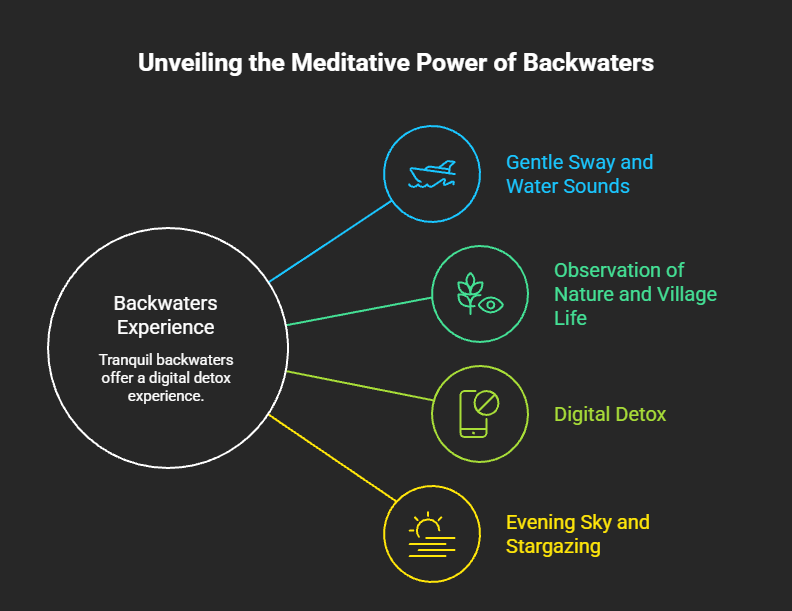
If you’ve spent your life around traffic, notifications, and deadlines, the backwaters will genuinely surprise you. There’s a gentle sway as the boat moves. The soft, repetitive sound of water against the wooden hull. A light breeze moving through the palm trees. It sounds simple but it has a real, almost meditative effect on the mind.
You start noticing things you’d normally scroll past the bright green of the paddy fields, birds diving for fish, the quiet rhythm of village life along the banks: people washing clothes, fetching water, going about their day exactly as generations before them did.
Many guests describe it as a digital detox without even trying the environment itself pulls you out of “work mode” and into something calmer, without you having to force it.
As evening sets in, the experience changes again. Houseboats typically anchor for the night in a quiet stretch of the backwaters, away from the main tourist channels, so you get to watch the sky shift from gold to deep orange, then fade into a night sky with far less light pollution than you’d find in any city. On a clear night, the stars over Vembanad Lake are genuinely striking and there’s something quietly humbling about sitting on an open deck, the water still beneath you, with nothing but natural sound around.
Choosing the Right Way to Explore
Not everyone wants the same experience, so here’s a simple breakdown:
- Luxury Houseboats — Best if you want a full overnight experience: private cabins, all meals included, and the surreal experience of falling asleep under a sky full of stars.
- Premium Shikara Boats — Smaller, open on all sides, and more agile. Great for shorter 3–6 hour trips where you want unobstructed 360° views and access to narrower canals larger boats can’t reach.
- Traditional Canoes — The most intimate, eco-friendly option. These take you deep into narrow village channels, right into the heart of everyday backwater life.
If you’re unsure which one fits your trip, think about time and purpose: a Shikara or canoe works well for a half-day outing or a quick escape between other plans, while a full houseboat stay is better suited for anyone who wants to genuinely unwind, disconnect overnight, and experience the backwaters at sunrise and sunset not just during the day.
The Food Is Half the Experience
Here’s something people don’t always expect: the food on a houseboat trip is just as memorable as the scenery. At Kerala Boat Bouse, meals are cooked fresh onboard by our own chefs, using traditional regional recipes.
- If you eat non-vegetarian, you have to try the Karimeen (Pearl Spot) fry a local delicacy, and honestly, one of the best things you’ll eat in Kerala.
- If you prefer vegetarian food, the traditional Sadya, served on a banana leaf with seasonal vegetables, sambar, dal, and crispy pappadam, is a full sensory experience on its own.
- We also prepare Jain and Vegan meals on request, made without onion, garlic, or root vegetables where needed so no one in your group has to compromise on their meal.
Beyond these highlights, expect a full spread across the day a hearty South Indian breakfast with appams, idlis, or dosas paired with stew or chutney; a generous multi-course lunch with rice, fish or vegetable curries, and traditional sides; and a lighter, comforting dinner as the boat settles for the night. Most ingredients, including fish, vegetables, and spices, are sourced fresh from local markets along the route, so the meals genuinely reflect the region rather than a generic “hotel menu” version of Kerala food. If you have allergies or specific dietary restrictions beyond Jain or vegan, just let us know in advance and our chefs will happily accommodate.
Why Choose Kerala Boat House
There are a lot of houseboat operators in Alleppey, so here’s honestly what sets us apart:
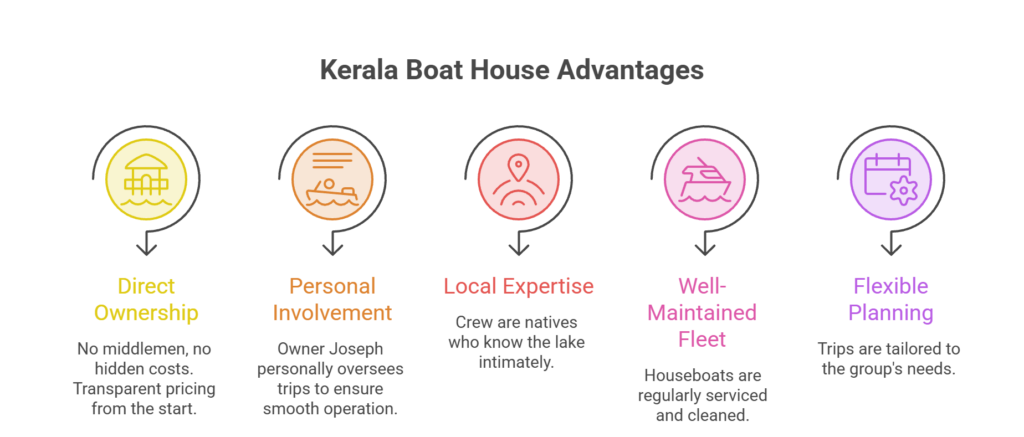
- No middlemen, no hidden costs. We’re a direct owner-operated service, which means transparent pricing from the start.
- Personal involvement. Our owner, Joseph, personally oversees trips to make sure everything runs smoothly.
- Local expertise. Our crew are natives of this region they know Vembanad Lake intimately and can take you to quiet, beautiful spots most tourists never see.
- Well-maintained fleet. Every houseboat is regularly serviced and cleaned between trips, with trained crew who understand both the waterways and basic safety protocols.
- Flexible planning. Whether you want a short half-day Shikara ride, a single overnight stay, or a multi-day backwater itinerary, we tailor the trip around what actually works for your group.
Why You Shouldn’t Skip This
It’s easy to treat a houseboat ride as “just another thing to do” on a Kerala trip, but that would genuinely be a missed opportunity. This isn’t a theme park or a rushed sightseeing stop. It’s one of the few travel experiences left where slowing down isn’t a compromise it’s the entire point.
Whether you’re planning a family trip, a couple’s getaway, or even a corporate offsite looking for a change of pace, a night (or even a few hours) on Alleppey’s backwaters tends to leave a mark. People don’t usually remember the fastest itinerary of their trip they remember the quiet ones. This might just be that one.
Frequently Asked Questions
- What types of houseboats can I choose from? We offer Deluxe, Premium, and Luxury houseboats with 1 to 7 bedrooms, depending on your group size and budget.
- Can I customize my food and dietary preferences? Yes, you can choose vegetarian or non-vegetarian meals, and we also offer Jain and Vegan options on request.
- Is it safe to stay on a houseboat? Yes. Our houseboats are well-maintained and run by an experienced, trusted crew who prioritize guest safety and comfort at every step.
- Are there budget-friendly alternatives? Yes, we also offer Shikara boat rides and kayaking for guests who want a shorter or more adventurous backwater experience.
- What’s the typical cruising schedule? Cruises usually begin at 12:00 PM, anchor for the night around 5:30 PM, and conclude the next morning with breakfast and a 9:00 AM checkout.
- What facilities are available onboard? Expect A/C attached rooms, comfortable lounge areas, private dining spaces, and open decks for uninterrupted views of the backwaters.