A Kerala houseboat cruise is now one of the most recognizable travel experiences in India. Every year, travelers from around the world visit the Kerala backwaters to spend time aboard these floating homes, gliding through palm-lined canals, peaceful lakes, and traditional villages.
But the story of Kerala houseboats began long before tourism.
These elegant vessels were once the backbone of Kerala’s transportation and trade network. Known locally as Kettuvallams, they carried rice, spices, coconuts, timber, and other goods through the intricate waterways of Kerala. Long before highways, trucks, and railways connected the state, these boats served as floating cargo carriers linking remote villages with major trading centres.
The history of houseboats in Kerala backwaters is not just about transportation. It is a story of craftsmanship, trade, culture, and the remarkable transformation of a traditional cargo vessel into one of the world’s most unique hospitality experiences.
The Birth of Kerala’s Waterway Civilisation
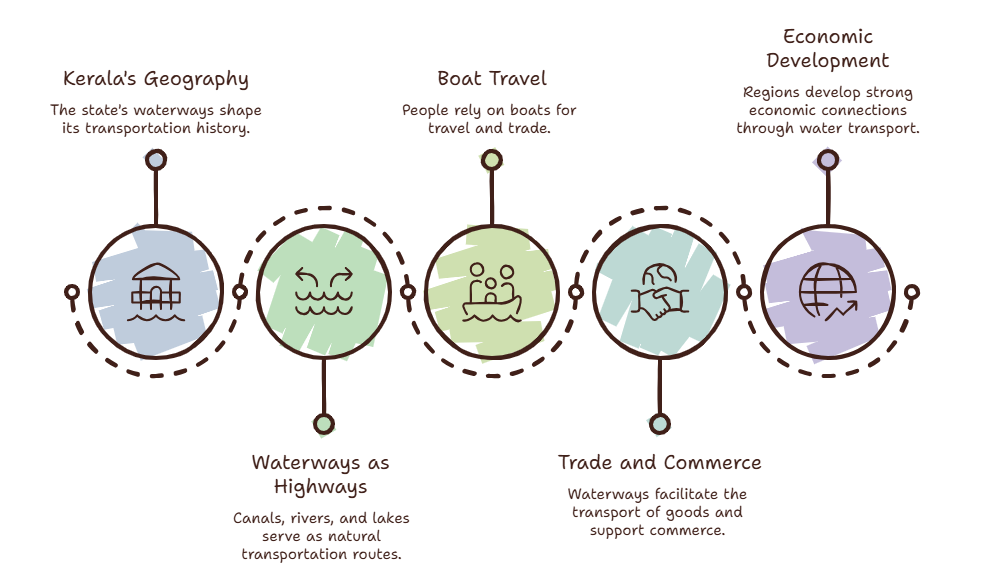
Kerala’s geography played a major role in shaping its transportation history.
The state is home to a vast network of interconnected canals, rivers, lakes, lagoons, and wetlands collectively known as the Kerala backwaters. For centuries, these waterways functioned as natural highways across the region.
Before modern roads existed, people relied heavily on boats to travel between villages and towns. Agricultural products, spices, and household goods were transported almost entirely through the backwaters.
Regions such as Alappuzha (Alleppey), Kumarakom, Kuttanad, Kollam, and Kochi developed strong economic connections through this water-based transport system. The backwaters were not simply scenic landscapes; they were essential trade routes supporting everyday life and commerce.
What Does Kettuvallam Mean?
The traditional Kerala houseboat was originally called a Kettuvallam.
The name comes from two Malayalam words:
- Kettu — meaning “to tie”
- Vallam — meaning “boat”
The name itself reflects the unique construction method used by traditional boat builders.
Unlike modern vessels that rely on metal fasteners, kettuvallams were built by tying wooden planks together using strong coir ropes made from coconut fibers. Remarkably, these boats were constructed without using a single nail.
This technique demonstrated the ingenuity of Kerala’s traditional craftsmen and helped create durable vessels capable of operating for decades on the waterways.
The Original Purpose of Kerala Houseboats
Modern travelers know houseboats as floating hotels, but their original purpose was very different.
Historically, kettuvallams functioned as cargo boats with massive carrying capacity. Some boats measured nearly 100 feet in length and could transport more than 25 to 30 tons of cargo at a time. This was significantly larger than the carrying capacity of many land-based vehicles of that era.
These boats commonly transported:
- Rice
- Spices
- Coconut products
- Coir
- Vegetables
- Timber
- Arecanut
The Kuttanad region, often called the Rice Bowl of Kerala, depended heavily on kettuvallams for transporting harvested rice to major markets and ports. Cargo boats frequently traveled between Kuttanad and Kochi, helping support Kerala’s trade economy.
A Floating Home for Boatmen
Kettuvallams were not merely transport vessels.
Because journeys often lasted several days, the boats included basic living spaces for the crew. Boatmen cooked meals, slept onboard, and sometimes traveled with family members during extended trips.
Over time, temporary shelters and covered sections were added to protect both cargo and passengers from heavy rain and intense sunlight. These practical additions would eventually inspire the design of modern Kerala houseboats.
The Extraordinary Craftsmanship Behind Traditional Houseboats
One of the most fascinating aspects of Kerala houseboat history is the construction process.
Traditional builders used locally available natural materials including:
- Anjili wood
- Jackwood
- Bamboo
- Coconut fiber ropes
- Palm leaves
- Natural resins
The wooden planks were tightly bound together using coir ropes. The gaps between planks were filled with coconut fiber and sealed using waterproof resin derived from boiled cashew nut shells.
The exterior was then coated with natural oils and protective substances to increase durability and resistance to water damage.
The result was a strong, eco-friendly vessel built entirely from natural materials.
Even today, traditional kettuvallam construction is admired as an example of sustainable engineering long before modern sustainability concepts existed.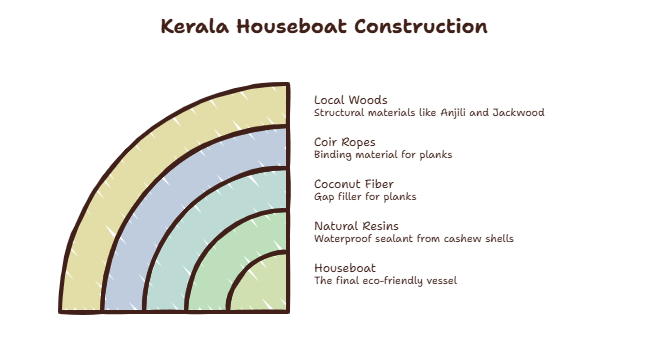
The Royal and Trading Connection
Houseboats were also connected to Kerala’s royal and trading history.
Historical accounts suggest that rulers from the kingdoms of Cochin and Travancore supported the construction of robust cargo boats for commercial trade. These vessels helped transport valuable products such as spices and agricultural goods to trading centers connected with Arabian and African merchants.
Because waterways offered efficient access to remote regions, kettuvallams became an important part of Kerala’s economic infrastructure for centuries.
The Decline of Traditional Cargo Boats
The golden era of kettuvallams began to fade during the mid-20th century.
As roads expanded and railway networks improved, transporting goods by land became faster and more convenient. Trucks gradually replaced water-based cargo transportation.
The development of modern transportation systems reduced the commercial importance of the Kerala backwaters. Many kettuvallams were abandoned, and the traditional boat-building industry faced decline.
For a period, it seemed likely that these historic vessels would disappear from Kerala altogether.
How Tourism Saved the Kettuvallam
The revival of Kerala houseboats began with tourism.
During the late 1980s and early 1990s, travelers visiting Kerala became increasingly interested in exploring the backwaters. Entrepreneurs recognized the tourism potential of traditional kettuvallams and began converting old cargo boats into floating accommodations.
Instead of transporting rice and spices, the boats would now carry travelers seeking relaxation and scenic experiences.
The transformation included:
- Bedrooms
- Attached bathrooms
- Dining areas
- Viewing decks
- Kitchens
- Lounge spaces
Although modern comforts were added, the traditional architectural appearance remained largely intact.
This creative adaptation not only preserved the kettuvallam but also created a completely new tourism industry.
The Rise of Kerala Boat House Tourism
As Kerala gained international recognition as a travel destination, boat house quickly became its most iconic attraction.
Travel magazines, tourism campaigns, and documentaries frequently showcased images of traditional houseboats gliding through coconut-lined waterways.
Soon, the Kerala houseboat became synonymous with:
- Kerala backwaters
- Slow travel
- Nature tourism
- Wellness tourism
- Cultural experiences
Today, many international visitors consider a Kerala houseboat stay the highlight of their trip to India.
Modern Kerala Houseboats: Tradition Meets Luxury
The modern houseboat industry has evolved dramatically.
Today’s Kerala boat houses range from simple budget vessels to ultra-luxury floating villas featuring premium hospitality services.
Modern amenities often include:
- Air-conditioned suites
- Private bathrooms
- Open sun decks
- Wi-Fi access
- Fine dining experiences
- Multi-bedroom accommodations
Some luxury houseboats even offer conference facilities, private chefs, and personalized travel experiences.
Despite these upgrades, most houseboats still retain the curved roofing, wooden structure, and traditional design elements inspired by the original kettuvallam.
Sustainability and the Future of Houseboats
As the number of houseboats increased, environmental concerns also emerged.
The health of Vembanad Lake and the broader Kerala backwater ecosystem has become an important issue. Authorities and tourism operators have increasingly focused on pollution control, waste management, and sustainable tourism practices.
Many modern operators now invest in:
- Solar energy systems
- Eco-friendly waste treatment
- Reduced plastic usage
- Sustainable tourism practices
Protecting the backwaters is essential for preserving both Kerala’s environment and the future of houseboat tourism.
Why Kerala Houseboats Are More Than Tourist Attractions
A Kerala boat house is not simply a floating hotel.
It represents centuries of history, traditional engineering, commerce, and cultural adaptation.
Every kettuvallam tells a story about:
- Kerala’s trading past
- Life along the backwaters
- Traditional craftsmanship
- Community livelihoods
- The evolution of tourism
When travelers cruise through Alleppey, Kumarakom, or Kuttanad today, they are experiencing a living heritage that continues to evolve while preserving its roots.
Conclusion
The history of boat house in Kerala backwaters is one of the most fascinating chapters in Kerala’s cultural heritage.
What began as a practical cargo vessel transporting rice and spices across remote waterways eventually transformed into one of the world’s most distinctive travel experiences. The traditional kettuvallam survived the decline of water-based trade and found new life as the symbol of Kerala tourism.
Today, every Kerala houseboat journey carries the legacy of centuries-old craftsmanship, trade, and backwater culture. Understanding this history adds a deeper appreciation to the experience, allowing travelers to see these floating homes not merely as luxury accommodations but as living reminders of Kerala’s remarkable relationship with water.